
Lauderdale Lakes Previous Resident Sources
An address history begins with sources that cover different eras and different roles. The current parcel card anchors the place. Deeds identify title transfers. Directories and census schedules can add occupants. Permits date work, while newspapers and probate can explain why a name vanished. No single source is a full list of previous residents.
Lauderdale Lakes grew chiefly in the postwar period and incorporated in 1961. Its older household trail often starts with Broward plats, deeds, telephone directories, and building evidence rather than an early standalone municipal directory.
| Source | Local years covered | Where held | What it can show |
|---|---|---|---|
| Broward Official Records online | January 1, 1978 to present, comprehensive | Broward RTT online | Deeds, mortgages, liens, plats, judgments |
| Older recorded books/indexes | Broward 1915 to 1977; predecessors earlier | RTT Search and Copy/archives | Parties, book/page, legal description |
| BCPA parcel data | Current roll plus displayed sale/value history | BCPA Property Search | Owner, mailing and situs, folio, improvements |
| City permits | Online span not stated | City/ePermits/request | Work, applicant, contractor, dates |
| Phone and city directories | Exact BCL years not posted | Main Library/Ancestry | Dated subscriber or occupant clue |
| Federal census | Public schedules through 1950 | NARA/library databases | Household on one census date |
| Newspapers | Title-specific local runs | BCL Periodicals/databases | Obituaries, notices, sales, social news |
| Broward probate microfilm | Verified 1915 to 1924 set | FamilySearch/Broward Clerk | Decedent, estate, representatives, heirs |
Start with the source closest to the date in question. Work backward from the present for a title chain, but use a dated household source when the real question is who lived here before.
Anchor Lauderdale Lakes Previous Residents to a Parcel
Enter the situs address in the Broward County Property Appraiser search. Copy the folio, legal description, current titled owner, mailing and situs addresses, municipality, year built, and displayed sale history. The folio is a parcel identifier. The legal description ties the land to a subdivision, lot, block, or condominium unit. Both survive postal-label changes better than a street address alone.
Situs means the physical taxable location. Mailing means where the owner asked to receive assessment notices. A difference may suggest an out-of-city owner or another mailing arrangement, but it does not identify the occupants. A homestead exemption can support owner occupancy for a tax year, subject to protected records and timing, yet it still does not list a full household.
Condominiums require extra care. One base street address can hold many separate unit folios. Match the unit's legal description before following a deed. Year built also dates an improvement, not the first previous resident. A prior structure, later permit, or delayed assessment update can change the story.
Local myth. A parcel's year built and the date its first household arrived are not the same fact; compare permits, deeds, and directories.
Trace Broward Deeds for Past Residents
The deed trail moves through people, instrument citations, and legal descriptions rather than through a reliable street-address index. Broward's comprehensive online Official Records coverage begins on January 1, 1978. The county coverage page directs users to Search and Copy Services for older documents that are not online.
The key backward move is simple: the seller on the current acquisition deed is the likely prior owner. Search that seller as an earlier buyer, then verify the same legal description. Common names, trusts, estates, and entities demand care. A deed proves transfer of title. It does not prove when the seller moved out or the buyer moved in.
- Open the BCPA card and save the folio, legal description, current owner, and most recent deed reference.
- Retrieve the current acquisition deed. Confirm that its land description matches the target parcel or unit.
- Record the grantor, who gave title, and the grantee, who received it.
- Search the grantor as an earlier grantee before the sale date. Compare names, instrument links, and the legal description.
- Repeat to the online cutoff, then request a bounded book/page or grantor-grantee search through Search and Copy Services.
- Before 1915, determine whether Dade or Palm Beach predecessor records hold the land evidence.
- Grantor
- The party transferring an interest in the recorded instrument.
- Grantee
- The party receiving that interest.
- Chain of title
- The linked sequence of recorded transfers for the same land.
- Legal description
- The lot, block, subdivision, plat, or unit wording that identifies land more securely than its postal label.
Lauderdale Lakes Records Across 1978
The 1978 digital boundary is the major local breakpoint. The Broward online index is comprehensive from that date forward. Earlier Broward books and indexes may require Search and Copy Services, a counter request, microfilm, or an archive. Supply a person, bounded years, known book/page, and legal description whenever possible. A focused request is easier to fulfill than a demand for an entire property history.
The official county source page shows the route for coverage and older copies. Its record access screen is relevant to any effort to identify previous residents through ownership.
Review Broward's Official Records coverage and older-copy guidance before crossing the online cutoff.
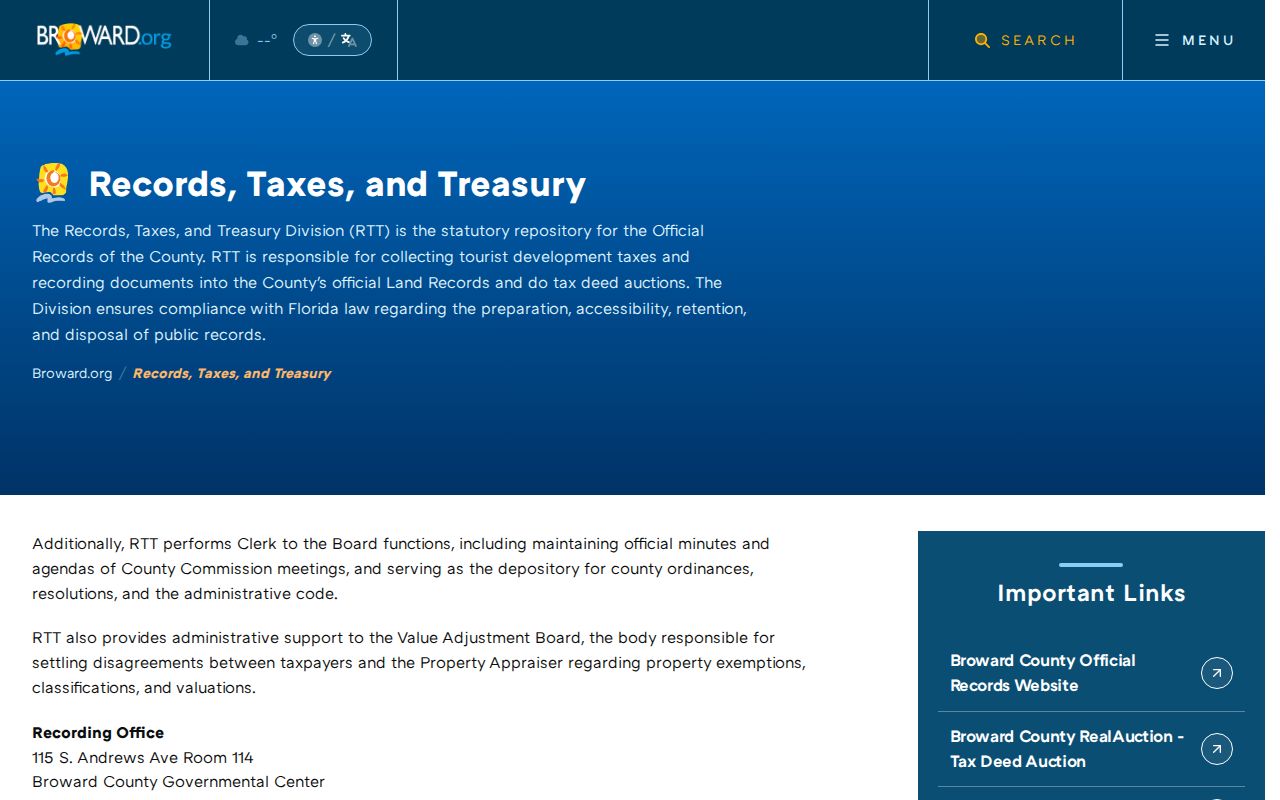
The captured page reinforces that web access and archival access are two parts of one search, not proof that older records do not exist.
Broward County itself was created in 1915. That provenance switch matters more than any alleged local record loss. No official source found a Lauderdale Lakes courthouse fire or a wholesale loss of county files. For land before 1915, identify the predecessor jurisdiction instead of searching for a county or city record series that did not yet exist.
Note: Save the date, query, filters, and citation for each search so a missing web result is not mistaken for an absent record.
Match Lauderdale Lakes Past Residents by Year
Owners are only half of an address history. A reverse or criss-cross directory lists an address by street and number, usually naming an occupant or telephone subscriber. A regular alphabetical directory may add spouse, work, or residence marks. Broward County Library confirms older telephone directories, though it does not publish a complete list of exact years. The collections themselves are described on the Lauderdale Lakes city directory page.
Use a simple dated flow: parcel identity → directory address → named subscriber → nearby directory editions → census household → deed or obituary check. The arrows show research order, not proof that every name is the same person.
- Select a directory edition after the structure existed and inspect both surname and reverse sections.
- Copy the entry exactly, including spouse, work clue, telephone, and abbreviations.
- Check the editions before and after it to bracket a first or last appearance.
- Pair the sequence with the 1940 or 1950 census when the date fits. The 1950 schedule is the newest public population census in 2026.
- Use the folio, deed parties, relatives, or obituary facts to resolve conflicting names.
A subscriber was not necessarily the owner. A deed holder may have lived elsewhere. A census describes the people enumerated on one date and can contain errors. Previous residents become credible when independent dated clues agree.
Date Lauderdale Lakes Homes Beyond Deeds
Lauderdale Lakes permits, plats, aerials, and code files can explain what happened between title transfers. City Quick Links expose Building Permit Inquiry, Broward ePermits OneStop, and a lien and permit search form. Search by exact property address and folio, then ask for closed as well as open cases when older items are absent online. A permit may identify an owner, applicant, contractor, project, and dates, but those roles do not prove residence.
A plat identifies subdivision, lots, blocks, and streets. BCPA aerials add physical context across time. Historic Buildings Surveys may be available through Main Library Periodicals. Digital Sanborn Maps are licensed through the NSU and BCL arrangement, but no official source confirms that a Sanborn sheet covers land inside modern Lauderdale Lakes. Verify the address in the map index before relying on that option.
No verified citywide street-renumbering event was found. The common continuity problem is jurisdiction and postal naming. A current Lauderdale Lakes parcel can carry Fort Lauderdale as its preferred postal city and may predate the city's 1961 incorporation. Use folio and legal description to bridge those labels.
Close Lauderdale Lakes Previous Resident Trails
Newspapers, death records, marriage or dissolution evidence, probate, and unclaimed property can explain the endpoint of a household trail. They must be used by their own rules. A death certificate without cause is public in Florida, while cause-of-death information remains confidential for 50 years. Marriage and dissolution certificates held by the state begin June 6, 1927; the original license or divorce file remains with the Broward Clerk.
The Florida death certificate page sets out the public and restricted versions relevant to past residents.
Check Florida death certificate access and ordering channels for the proper copy.
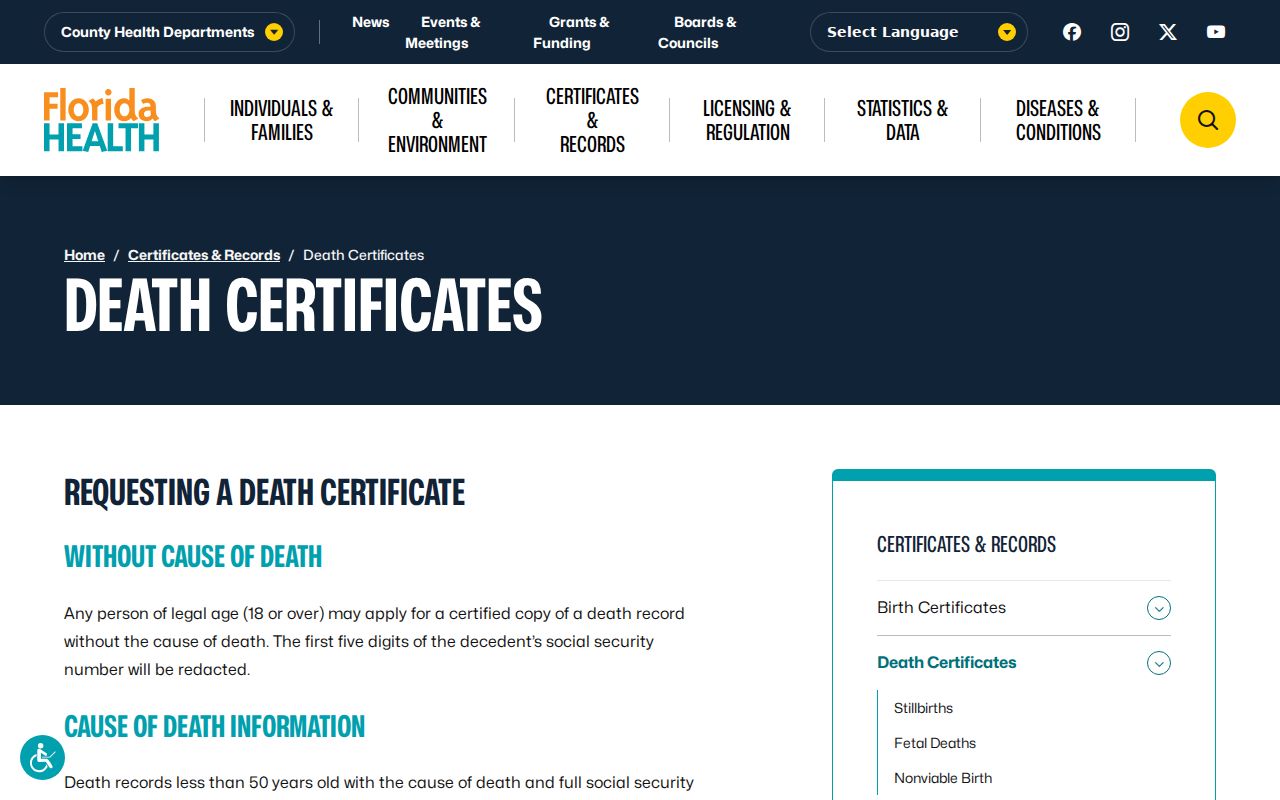
This state page helps separate a public certification without cause from protected cause details.
For a relationship or name change, the state's marriage and dissolution pages describe certificate coverage.
Review Florida marriage certificate records when a spouse or surname links two dated address records.
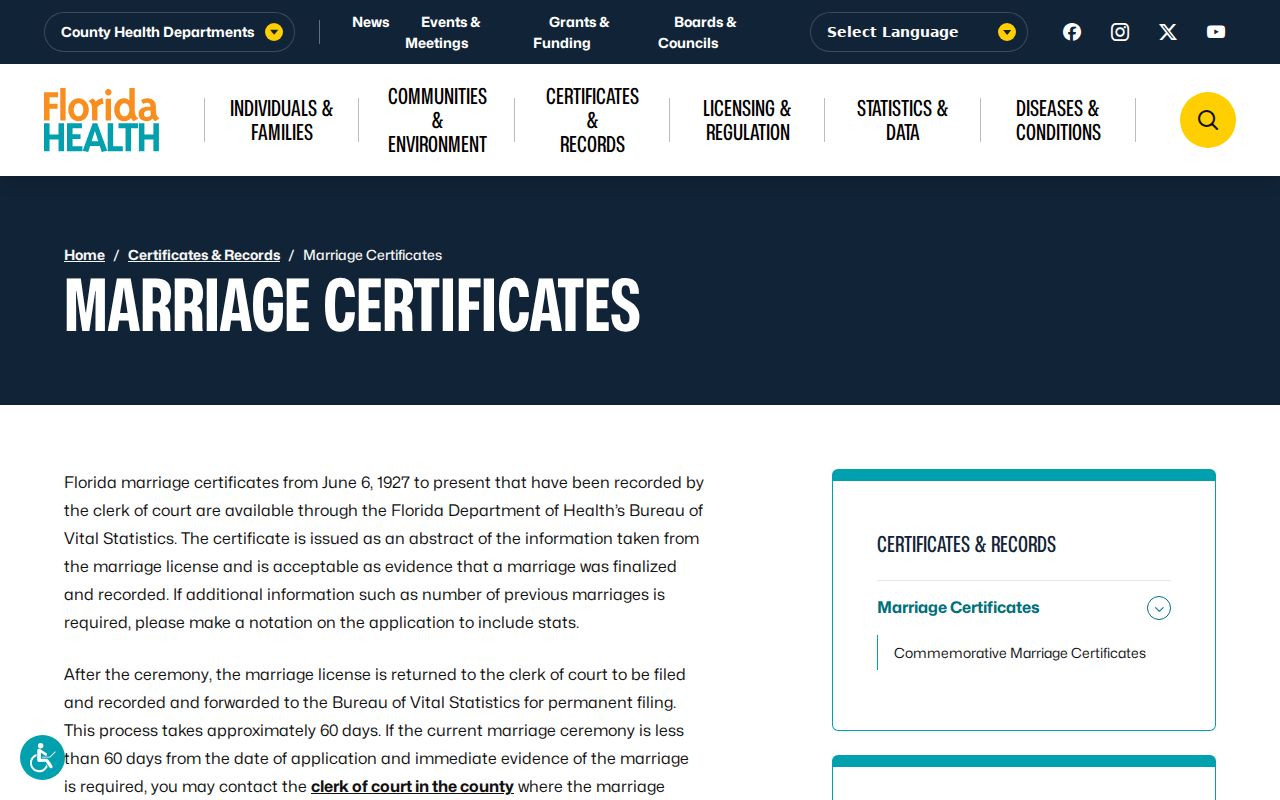
The marriage source supplies event evidence, while a directory or deed still supplies the address link.
Review Florida dissolution certificate records when later records use different surnames or household ties.
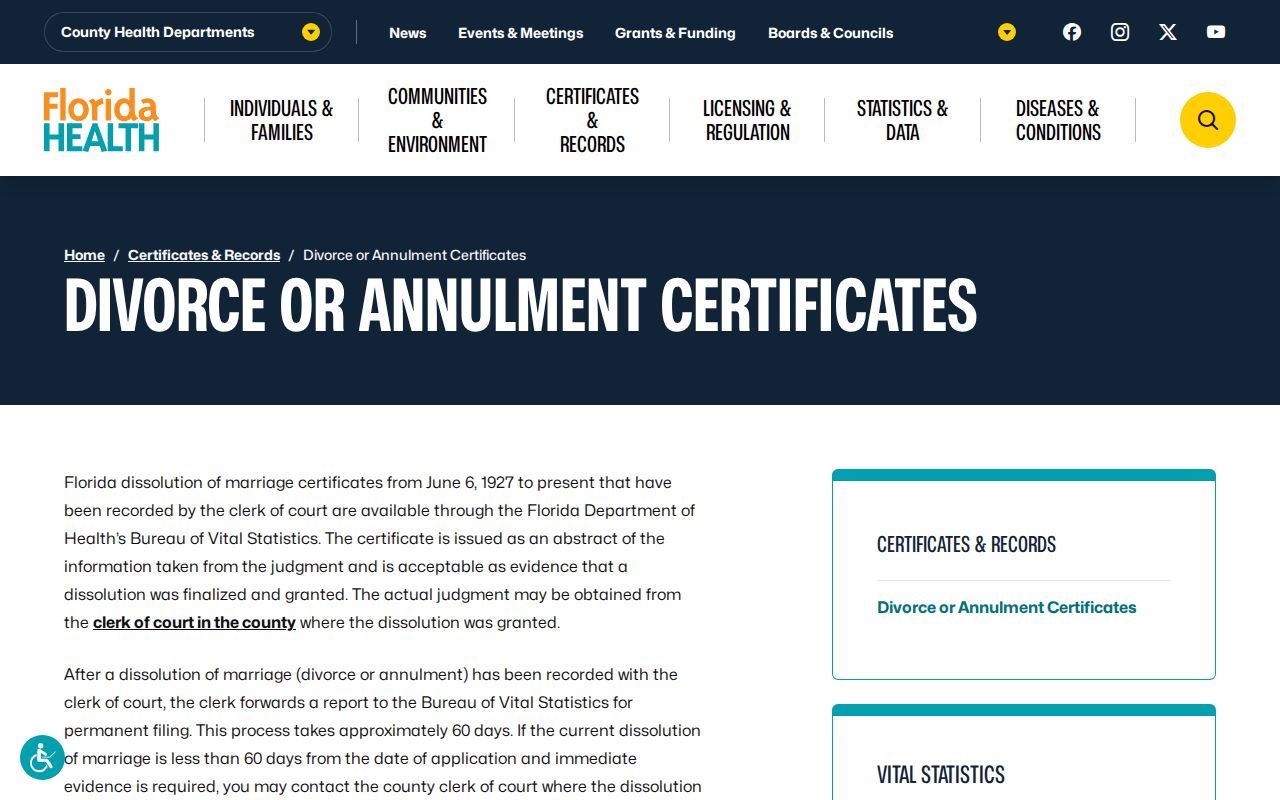
A state dissolution certificate is an abstract. The judgment and court docket remain with the clerk.
Main Library Periodicals accepts obituary and local article requests at periodicals@broward.org. A focused request can include full name, approximate death date, address, relatives, and funeral home. Probate can identify a decedent, representative, and possible heirs. Some filings remain restricted, and an old heir address may be stale.
Check Lauderdale Lakes Past Resident Loose Ends
Florida Treasure Hunt can provide another dated lead when unclaimed property was reported under a former resident's name. A result can identify the reporting holder or property clue, but not a current address. A claim requires proof of identity and ownership. Search variants and preserve the holder name rather than treating a same-name match as final.
Search Florida's official unclaimed property service after deeds, directories, and life-event records have established the identity.
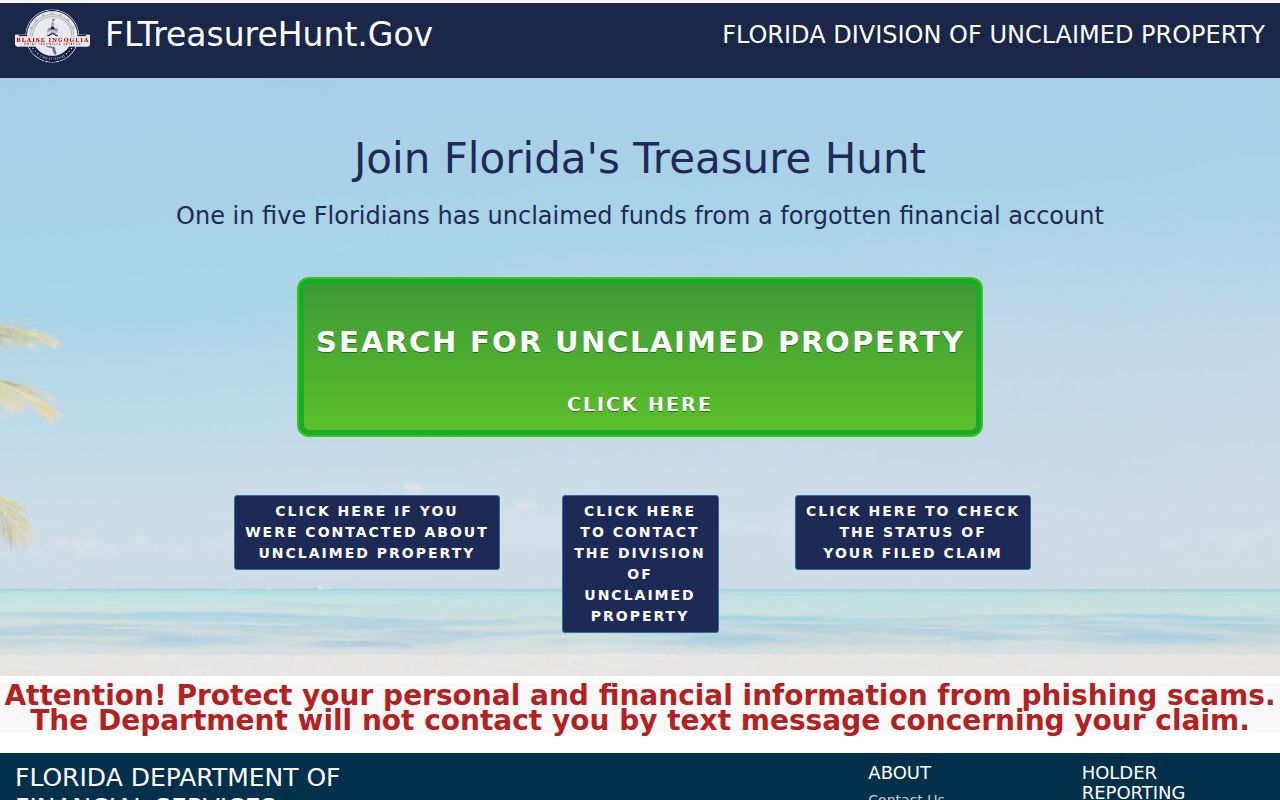
The official search can add a holder clue to a historical trail, while the claim process tests the required evidence.
Negative results demand discipline. A miss can reflect spelling, date coverage, a protected record, trust ownership, delayed indexing, or the wrong jurisdiction. Search and Copy Services, the recorder counter, city requests, library microform, and archive finding aids are the documented fallbacks. Record conflicts instead of silently choosing the most convenient name.
Lawful use. Research previous residents for family history, house history, estate matters, or personal curiosity. Never use stale or current details to stalk, harass, or harm a living person.